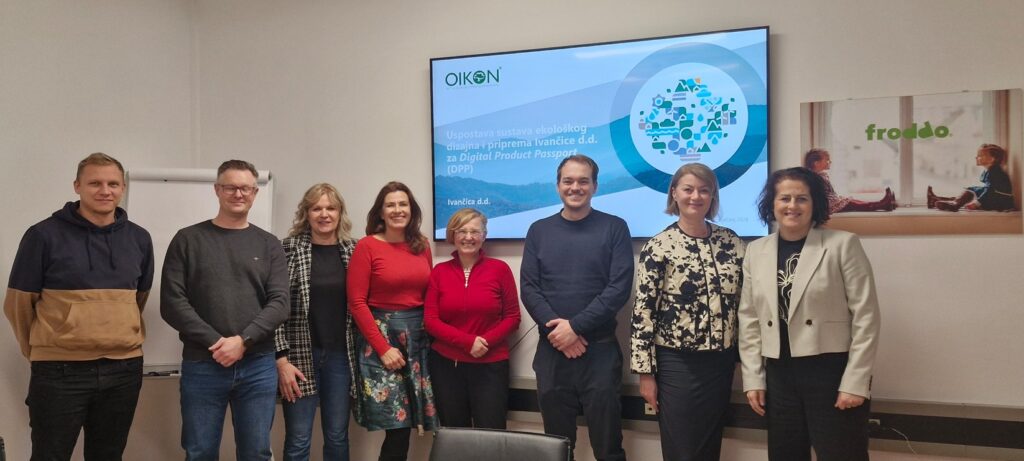
February 19, 2026 – Within the framework of Regulation (EU) 2024/1781 on ecodesign for sustainable products (ESPR), Oikon is leading one of the first integrated projects in Croatia that connects Life Cycle Assessment (LCA), Environmental Product Declarations (EPDs), and preparation for the Digital Product Passport (DPP).
The project is implemented in cooperation with Ivančica d.d. and the Froddo brand, with the support of the European Bank for Reconstruction and Development (EBRD).
The ESPR represents the most significant regulatory change in the European product framework in the past decade. It introduces the Digital Product Passport and establishes requirements for measurable and verifiable data on environmental impacts, material flows, waste, and circularity. Textiles and footwear have been identified as a priority product group, alongside furniture, tyres, detergents, paints and lubricants, and steel and aluminium. The first delegated acts are expected in late 2026 or early 2027.
In this context, timely preparation is not only a matter of formal compliance but also of strategic readiness. Establishing robust data systems before sector-specific requirements enter into force enables a stable transition, reduces regulatory risk, and helps maintain market position.
The project includes:
- conducting LCA studies for representative products in line with expectations of the upcoming regulatory requirements
- developing EPDs as a standardised and comparable data format
- establishing a Product Lifecycle Management (PLM) data governance model as the operational foundation for the Digital Product Passport
Developing systems to track and structure data on materials, emissions, waste, and design characteristics is becoming a key element of long-term regulatory preparedness. In this project, Oikon combines regulatory interpretation, life cycle assessment methodology, and data governance architecture—capabilities that are becoming critical in the new European product policy framework.
The project builds on the Sustainability Strategy to 2030 and the SBTi targets that Oikon developed for Ivančica, aligned with the Paris Agreement, and represents a continuation of the partnership in developing sustainability management systems based on measurable, data-driven indicators.