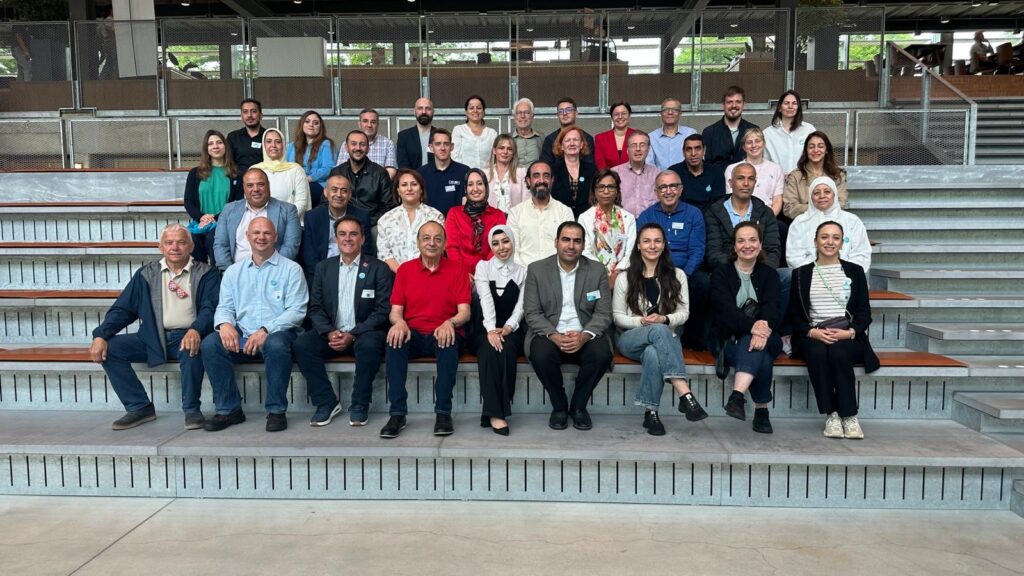
June 29, 2026, Enschede, Netherlands – From 17 to 19 June, our colleagues Dr Iva Odak and Bruno Ćaleta represented Oikon at the first thematic training event of the Digital Twin Technologies for Sustainable Development (DTT4SD) project, implemented under the Erasmus+ CBHE programme. The event was hosted by the ITC Faculty of the University of Twente in Enschede, the Netherlands.
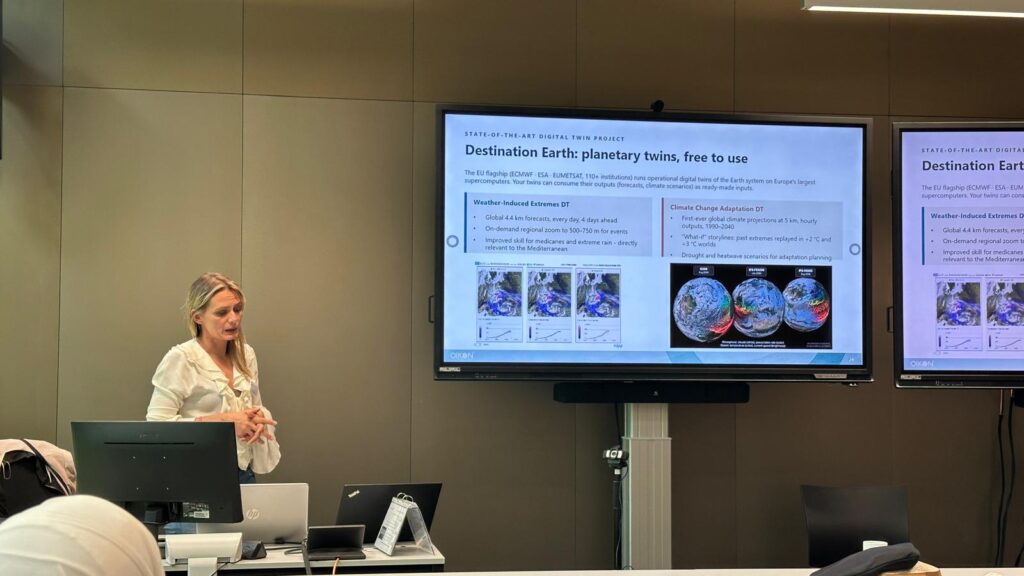
The three-day programme brought together project partners to explore the use of digital twin technologies for sustainable development. Through lectures, workshops, and hands-on activities, participants covered topics including cloud and distributed computing, systems modelling, curriculum development, and work in digital twin laboratories, including a visit to the BMS Digital Twin Lab.
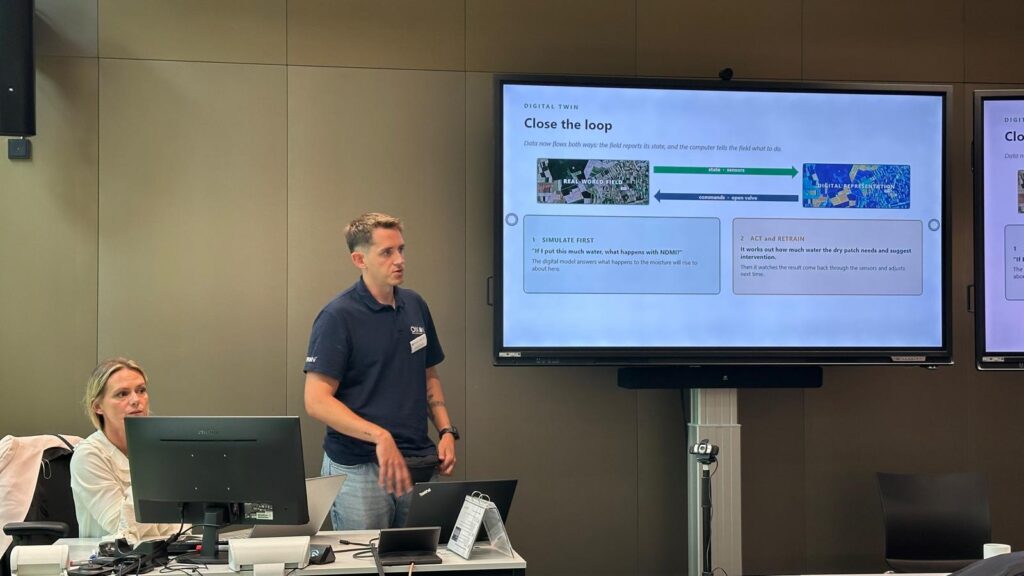
As part of the programme, we delivered a presentation entitled “Building Digital Twins for Agriculture: from use-case to working twin”, where we shared practical insights from our Earth Observation work and guided participants through the process of developing a digital twin, from defining a use case to creating a functional solution.
We focused on topics directly relevant to the project partner countries, including flood management, irrigation, and desertification monitoring. We explained the difference between a digital model, a digital shadow, and a true digital twin, and demonstrated why the “decision loop” is the key element that transforms data into a tool that supports decision-making.
We also highlighted the importance of clearly defining the purpose before selecting a technology platform. If it is not possible to clearly identify which decision the digital twin is intended to improve and who will make that decision, the project is not yet ready for development. We shared lessons learned from commercial projects as well, where data collection and processing often take considerably longer than software development, sensors may fail or produce inconsistent measurements, and data ownership and governance issues need to be addressed from the very beginning.
Using a practical irrigation example, we demonstrated how a functional digital twin can be developed starting from the identification of water stress in agricultural fields. We also presented some of the solutions we currently use for monitoring coastal change and detecting invasive species.
Participating in this event provided an excellent opportunity to put our years of Earth Observation experience at the service of partners who are building digital twin capacities in their respective countries. At the same time, we had the opportunity to learn from and exchange experiences with colleagues from Egypt, Jordan, and Morocco participating in the parallel MLUMSE training programme.
We look forward to continuing our collaboration and further developing innovative solutions that support sustainable natural resource management and climate change adaptation through the application of digital technologies.