


Project name: Control of invasive species populations in the Neretva Delta within the bePrePAred project (Interreg IT-HR: Preparing, Adapting, Reconstructing: actions to promote climate change adaptation and risk disaster resilience in Italian and Croatian sensitive ecosystems)
Client: Public Institution for the Management of Protected Natural Areas of Dubrovnik-Neretva County
Period: 05/2025 – 07/2026
Location: Croatia
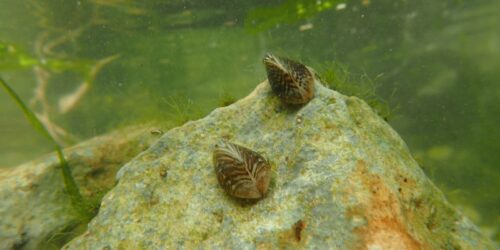
As part of the bePrePAred project, a study was conducted to assess the distribution and population density of the invasive zebra mussel (Dreissena polymorpha) in the Neretva Delta. The survey covered a substantial number of sites examined in detail, including the main river course, its branches and tributaries, lakes and other connected water bodies.
Survey area and site selection
The sites were selected using a combination of criteria to ensure the most comprehensive possible coverage of potential habitats and an accurate representation of the spatial distribution of the species across the survey area. Administrative, ecological, hydrographic and geomorphological criteria were applied. From an administrative perspective, the survey covered the protected area managed by the competent public institution. Ecological criteria included both freshwater and brackish ecosystems, while hydrographic criteria encompassed different types of water bodies, such as river branches, coves, tributaries and main channels. Geomorphological criteria included channel morphology, substrate type and water-column depth.
A number of sites were selected specifically because of the presence of potentially suitable microhabitats for colonisation by the species. These included concrete-lined banks, bridge piers, dams, concrete and wooden jetties, banks reinforced with riprap, and floating structures such as buoys. One site was also included following information provided by local residents, in order to verify an informally reported occurrence of the species. Sampling and site inspections were conducted using a combination of field methods, depending on habitat accessibility, water transparency, substrate type and the depth characteristics of each site.
Field methods for surveying zebra mussel populations
The methods applied included:
(1) visual surveys from a boat;
(2) surveys conducted on foot along accessible shoreline and shallow-water areas;
(3) diving surveys in sublittoral and deeper habitats; and
(4) the use of a benthic hand net and grab sampler to collect macrozoobenthos and substrate samples.
The use of multiple methods in surveys of Dreissena populations is justified because individual methods perform best in different habitat types, particularly where conditions vary between hard substrates, shallow littoral zones, and deeper or less accessible sections of the riverbed.
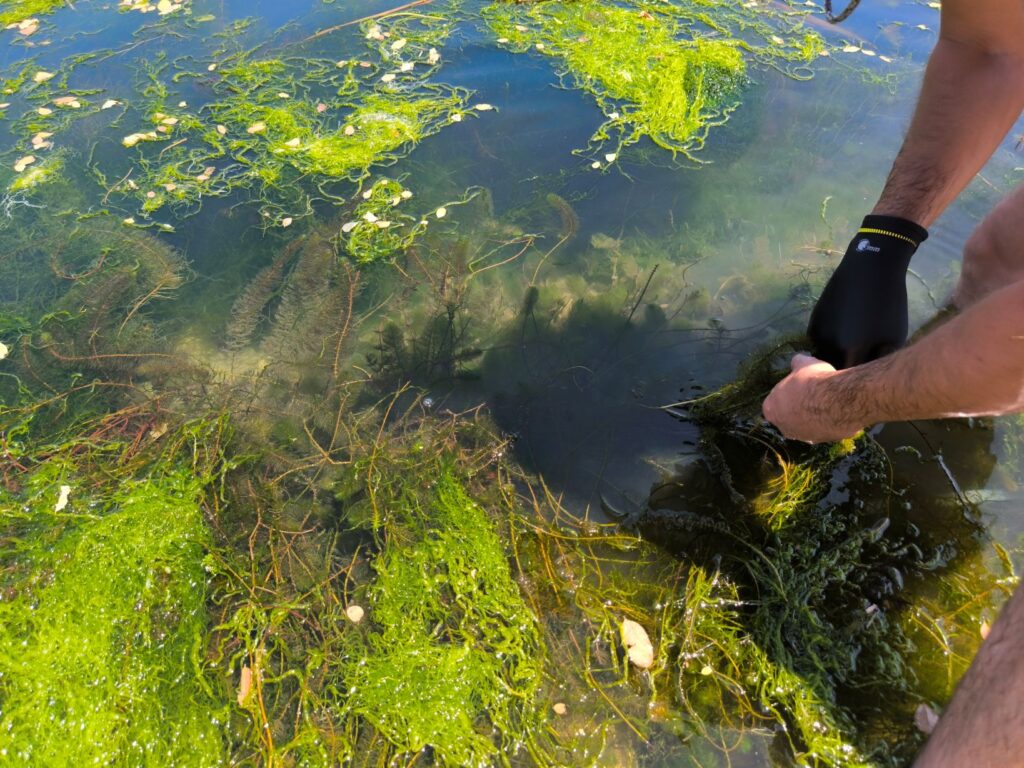
In shallow and accessible parts of the sites, bivalves were searched for by visually inspecting the substrate and collecting specimens by hand. In deeper areas, surveys were conducted by diving and directly observing individuals attached to natural and artificial substrates. At selected sites, benthic sampling was also conducted using a benthic hand net and grab sampler to inspect the substrate, collect specimens and confirm the presence of the species where visual surveys alone were insufficient. A square benthic sampling frame with a net (“kracer”) was also used to sample bivalves and estimate population density, expressed as the number of individuals per square metre, wherever field conditions permitted. Collected specimens of D. polymorpha and other recorded bivalves were preserved in ethanol for subsequent laboratory analysis. In the laboratory, shell length, width and height were measured using a high-precision digital calliper.
Water parameters, test plot and spatial data
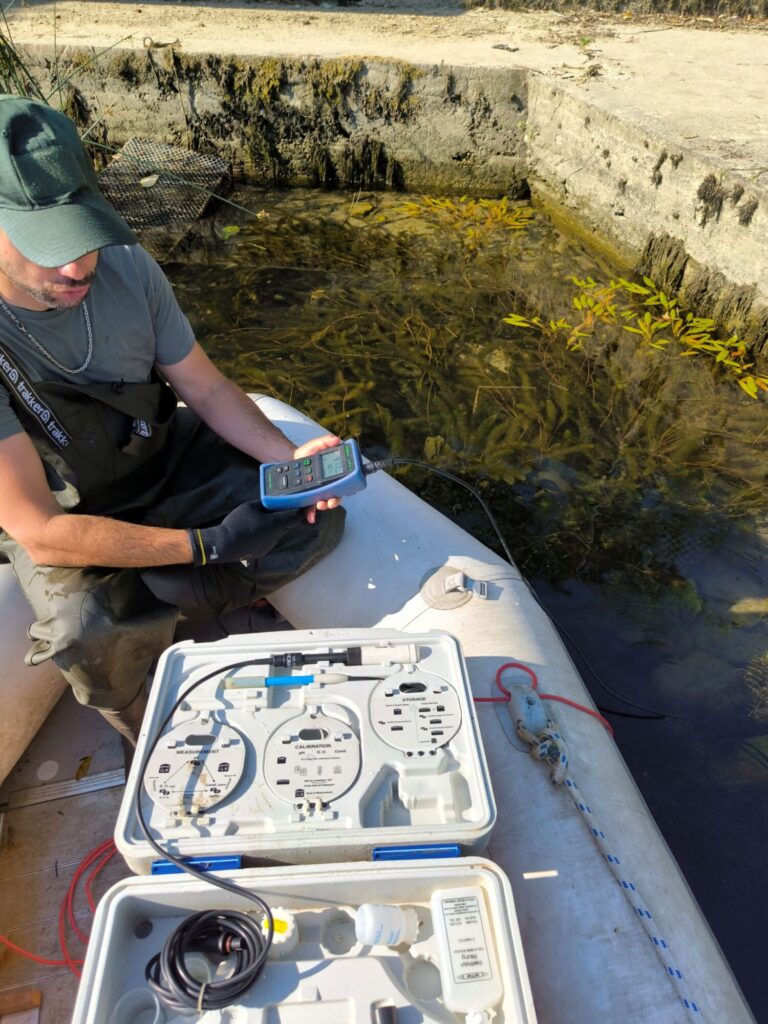
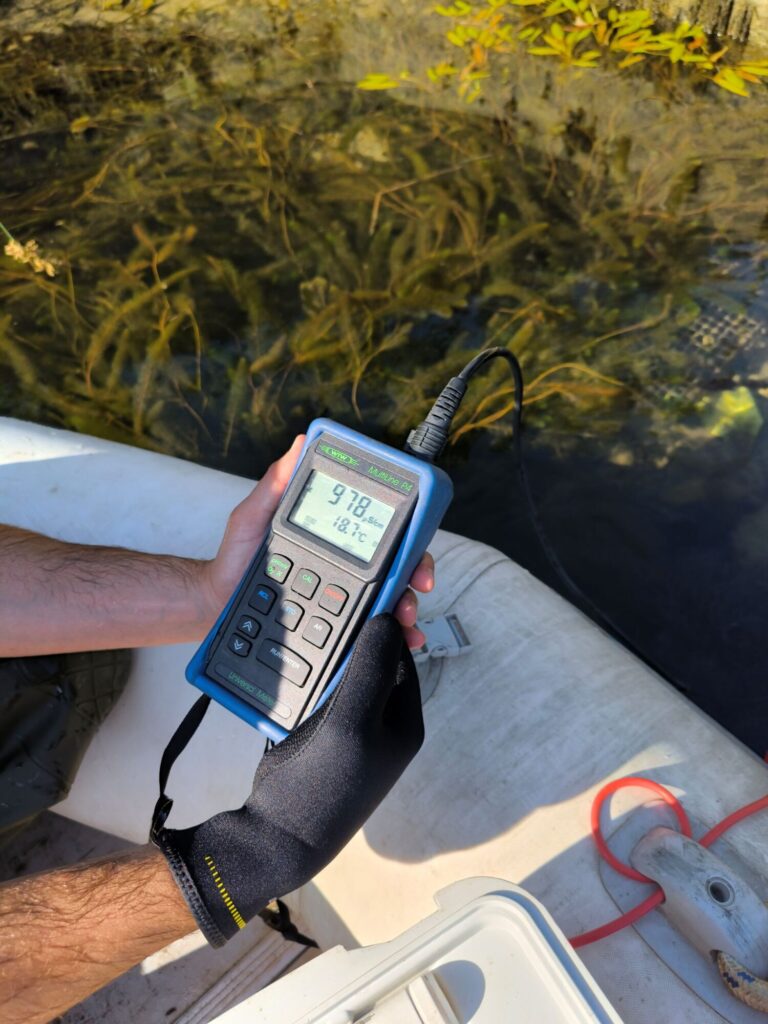
The principal physicochemical water parameters were measured at all sites: water temperature, dissolved oxygen concentration, oxygen saturation, pH and electrical conductivity. The main habitat characteristics were also recorded, including substrate type (bedrock, stones, sand, gravel, silt, clay and mud), the position of the watercourse within the surrounding landscape, such as grassland, forest, scrub or urban area, the presence of vegetation within and alongside the watercourse, and the degree of shading or overhead cover. This set of abiotic and habitat data is important for interpreting the occurrence and population density of Dreissena, as the species is known to exhibit clear preferences for particular substrate types and hydromorphological conditions.
In addition to the survey activities, all Dreissena polymorpha individuals were removed from a selected test area in order to assess whether the species reproduces within the study area. For this purpose, a site with a high estimated population density was selected, where a test plot was established and all individuals present within the plot were completely removed.
GPS coordinates were recorded for all survey sites using the official national coordinate reference system. Field data on the sites, recorded species, abundance, habitat characteristics and measured parameters were organised in tabular form. Spatial data were processed in a GIS environment to produce maps showing the distribution of the target species and other relevant records.
Distribution and population density
The presence of D. polymorpha was confirmed at a proportion of the surveyed sites. Positive records were concentrated primarily in the middle and lower sections of the main river course and within its larger connected branches. The species was not recorded in the surveyed tributaries, nor in the lake systems within the survey area. This spatial pattern indicates that the current spread of the species remains restricted to the main river corridor and its larger connected branches.
The highest population densities were recorded at sites with hard and stable substrates, particularly concrete-lined banks, stone structures and anthropogenically modified sections of the watercourse. Sites with built shoreline and water infrastructure were especially notable, with a very high abundance of individuals and continuous colonisation of suitable substrates. Juvenile individuals were also recorded at several sites, indicating that the species may be reproducing within the study area.
Risks of further spread and recommended management measures
The results show that Dreissena polymorpha is present in stable populations within the study area and has the potential to spread further. The greatest risk concerns its expansion into other connected freshwater and brackish habitats, as well as its possible adverse effects on native aquatic communities, particularly native bivalves, benthic organisms and other ecosystem components. An additional risk is the fouling of water infrastructure, vessels and artificial surfaces.
Based on the study findings, continued systematic monitoring is recommended, particularly at the boundaries of the confirmed range and in water bodies where the species has not yet been detected. Selective mechanical removal is also recommended at sites with high population densities, while chemical control methods should be avoided because of the sensitivity of the ecosystem and the presence of native and endemic species. Management activities should also include the education of local residents, fishers, vessel users and other stakeholders on preventing the unintentional transfer of the species into new habitats.
This study provides an initial expert basis for the further monitoring, management and control of zebra mussel populations in the Neretva Delta, as well as for planning measures to protect the sensitive aquatic ecosystems managed by the competent public institution.
Implementation of this Project contributes to the following Sustainable Development Goals:
